A resource management plan is essential in professional services project management, outlining how available resources will be allocated and managed throughout an engagement.
Resource management plans need to be strategic, dynamic, and data-driven, balancing demand, capacity, and available resource to optimize utilization, prevent employee burnout, and ensure projects are delivered on time and on budget.
In this guide, we explain what a resource management plan should include, why it’s important, and the role of AI-driven resource management software.
Key takeaways
-
A resource management plan in project management (sometimes known as an engagement plan) should be dynamic, evolving as the engagement changes, while showing the impact of resourcing decisions on project financials
-
The project plan is different to the resource management plan; the former covers overall project scope, while the latter focuses on how resources will be allocated and utilized to meet project requirements
-
The key components of a strategic resource management plan include project scope, budget details, demand forecasts, resource utilization targets, and suitability scoring criteria
-
Ongoing, dynamic resource planning is important to help ensure optimal resource allocation, avoid resource conflicts, reduce the risk of staff burnout, keep engagements agile, and protect client relationships
-
Dayshape is an AI resource management platform that supports agile resource planning. Dayshape’s AI-powered scheduling engine can identify strategic, data-informed resource combinations to form the basis of a robust resource management plan
Contents
1. What is a resource management plan?
2. Capacity planning vs resource planning: what’s the difference?
3. What needs to be included in a resource management plan?
4. How to create a resource management plan
5. What are the benefits of a robust resource management plan?
6. Resource management planning best practice tips
7. How to use AI to create a resource management plan in 5 steps
8. What are the key components of effective resource planning?
9. How often should a resource management plan be updated?
10. What key metrics measure the success of a resource management plan?
11. Transform resource planning with Dayshape
What is a resource management plan?
A resource management plan is a framework used in project management to outline how resources will be identified, allocated, managed, and optimized throughout a project’s timeline.
Typical resources covered by a resource management plan include:
-
People
-
Budgets
-
Specific skills
-
Equipment
The purpose of a resource management plan is to set out how your firm intends to resource and deliver an engagement. It’s about identifying the right resources, when they’re needed, and for how long, while balancing availability, cost, project requirements, and individual workloads.
Capacity planning vs. resource planning: what’s the difference?
Capacity planning and resource planning go hand-in-hand, but there are key differences between the two:
| |
Capacity Planning
|
Resource Planning
|
|
Focus
|
Understand available capacity against current and future demand
|
Plan how resources are deployed across work, based on demand, skills, availability, and priorities
|
|
Goal
|
Identify capacity gaps, surpluses, and constraints early enough to respond
|
Make the best use of available resources to meet business, client, and people needs
|
Capacity planning takes a broader view of whether a firm has sufficient capacity and skills to meet current and future demand, while resource planning focuses on how available resources are allocated across specific projects and engagements.
Effective resource planning should be informed by capacity planning, ensuring allocation decisions reflect both project requirements and wider workforce availability.
What needs to be included in a resource management plan?
A resource management plan focuses on the resources required to deliver a project, including when and where they’re needed, and how they’ll be allocated. It will also look at the impact of these decisions on engagement delivery, and project financials. The most effective resource management plans will include the following components:
-
Scope: project scope informs resource requirements, so it’s important to understand how the scope – and any potential changes in scope – affect the skills, roles, hours, and capacity required to deliver the engagement
-
Available resources: every professional services resource management plan needs to define the resources, capacity, and available people required to deliver the engagement on time and on budget
-
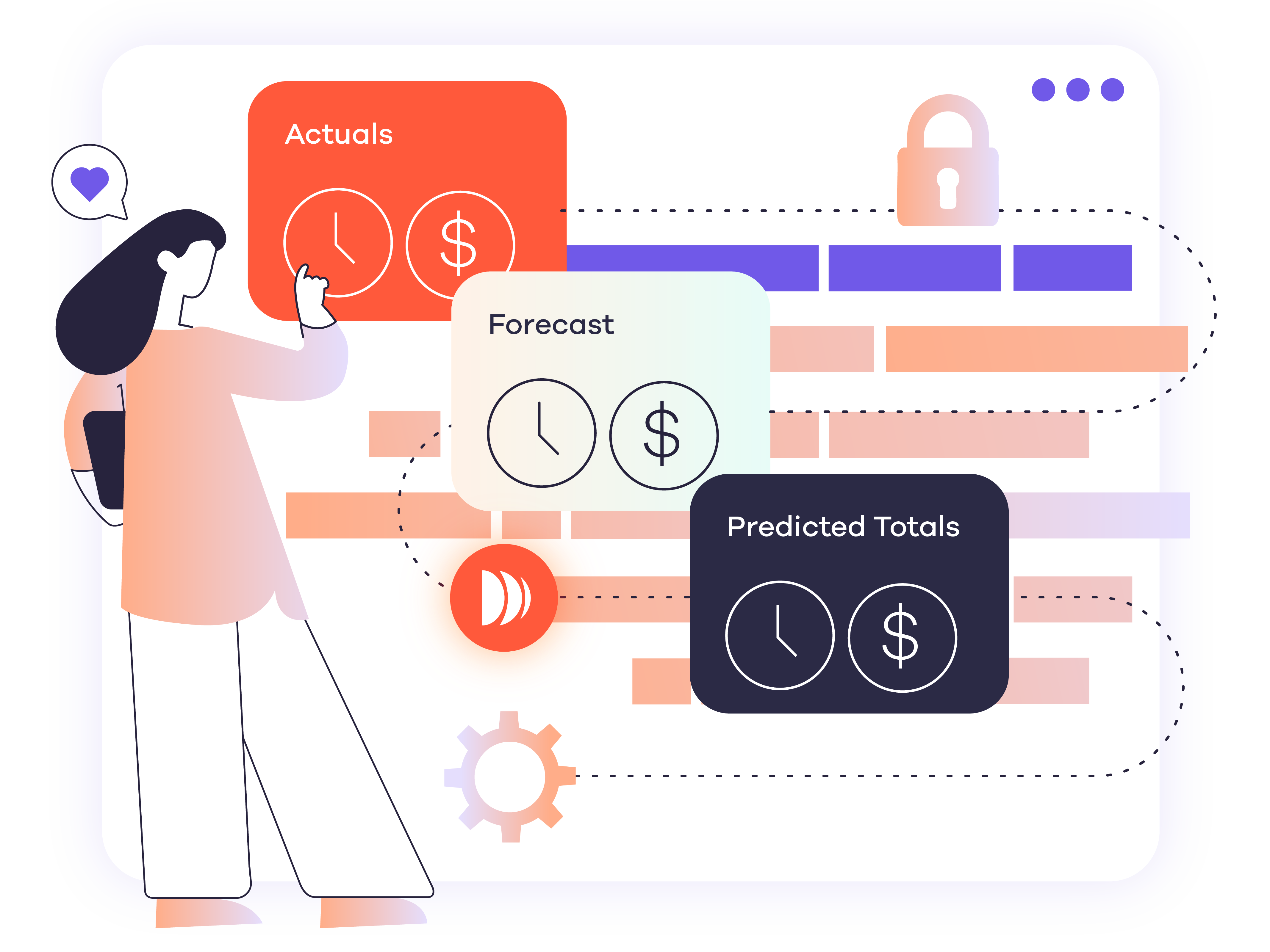
Project financials: key financial information to include in a resource plan includes available budget, projected margin, and financial targets. As the project gets underway, engagement economics can be tracked in real time to ensure work stays aligned with the initial plan, and the financial impact of resourcing decisions can be fully understood
-
Suitability criteria: the resource management plan should define what the engagement needs in terms of skills, experience, qualifications, seniority, and location. This can then be matched against availability, skills, work preferences, and individual career goals to identify the most suitable people
-
Mitigation plans: identify potential bottlenecks, skill gaps, or scheduling conflicts as part of the resource planning process, and outline how these should be addressed if/when they occur. Use scenario planning to outline how resource plans can be adjusted as scope, availability, or timelines change, or margin begins to be impacted. For example, consider resource leveling or smoothing, and your strategy for managing scope creep
-
Ongoing monitoring: a resource management plan also needs to outline how planned vs actual hours, availability, margin, scope changes, and emerging resource conflicts will be monitored throughout the engagement
How to create a resource management plan in 5 steps
Effective resource planning isn’t necessarily a linear process. Plans should be revisited as project requirements, availability, capacity, and financials change. However, following the below steps can help you to create a structured, data-informed resource management plan:
Step 1: Review project scope
The first step in creating a resource management plan is to review and understand the agreed project scope, and translate this to resource requirements. Identify the skills, roles, seniority, hours, and capacity that will be needed, and when.
Step 2: Identify resource availability
Next, check the availability of team members and other required resources to identify any gaps, training needs, or clashes. Dayshape does this for you, transforming your approach to resource planning.
Step 3: Resource allocation
The third step of the process is to allocate resources and schedule tasks by matching the right people to the right work, based on:
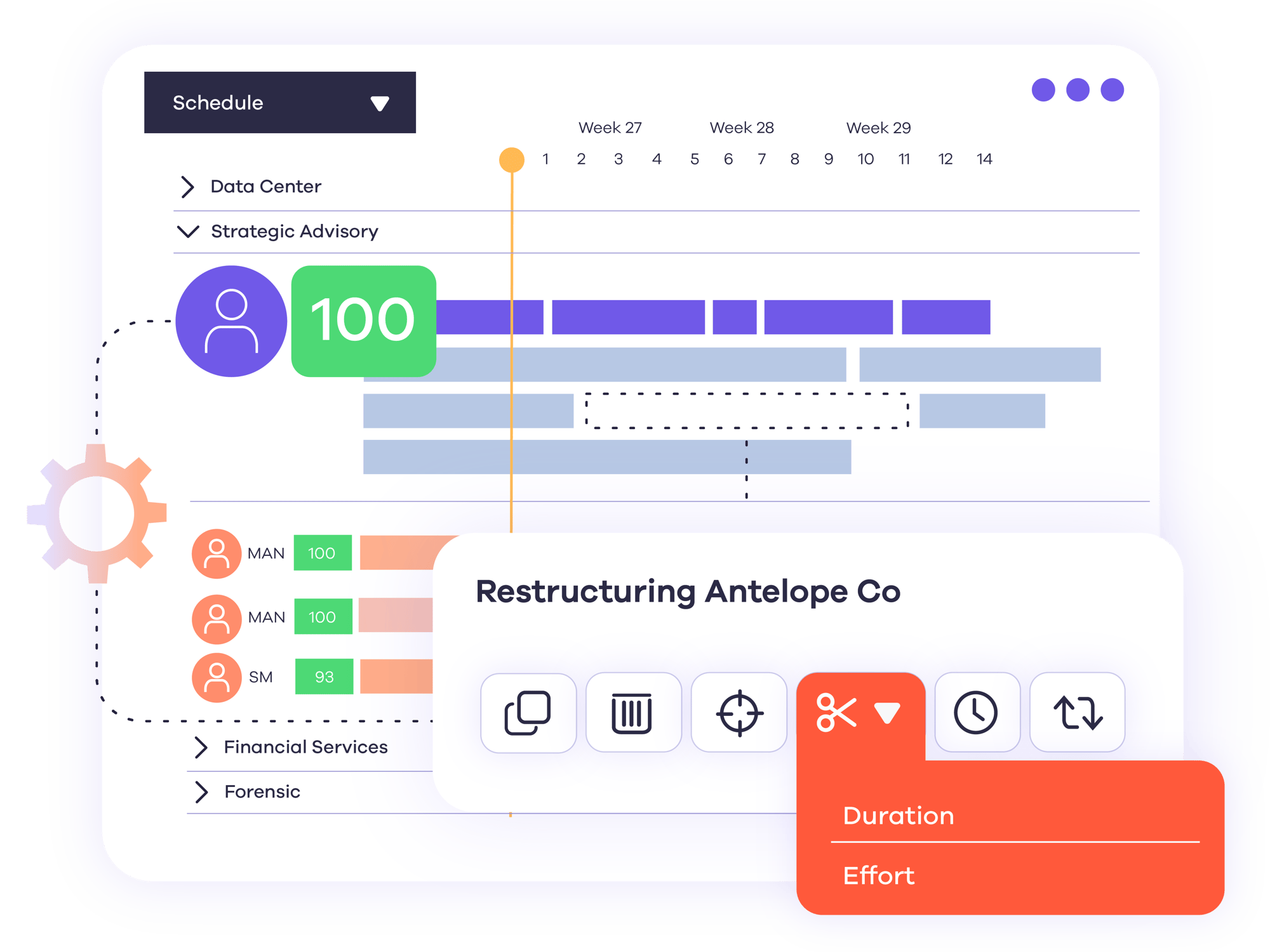
Resource decisions have a direct impact on engagement economics, so cost and margin need to be considered when allocating resources, resolving conflicts and adapting the plan. Dayshape supports resource managers in this process, while continuing to balance the needs of the engagement with wider business priorities.
If an individual resource appears over- or underutilized, consider resource leveling or smoothing to keep workloads fair and balanced, and remember that availability doesn’t necessarily mean suitability. Maintain a single, up-to-date view of the resource plan, so all changes are visible to the relevant stakeholders.
Step 4: Address resource gaps
The next step is to resolve any resource gaps identified once demand, availability, and suitability have been brought together. This could mean changing the resource mix, project timing, using alternative delivery models, looking into hiring or the use of contractors, or developing skills where there’s a longer-term resource gap.
Step 5: Monitor performance and adapt in real time
It’s also important to outline how performance will be monitored as the engagement progresses. Dayshape provides detailed reports in real time, supporting continuous resource management to keep your resource plan dynamic.
What are the benefits of a robust resource management plan?
A strategic, data-driven resource management plan will deliver multiple benefits for professional services firms, including:
1. Maximize profitability
A strategic resource plan will maximize the potential of available resources while protecting margins. A robust plan also helps to reduce the risk of project or budget overruns, further maximizing profitability. When teams have visibility into the financial impact of the resource mix, costs, and changes to the plan, they can protect margin throughout the engagement.
2. Optimize resource allocation
One of the key purposes of a resource management plan is to optimize resource allocation to prevent any one resource being under- or overutilized. Optimized allocation is about aligning the right people with the right work, considering their skills, experience, availability, cost, career development opportunities, and client requirements. Resource planning should ensure workloads are fairly and strategically balanced.
3. Avoid resource conflicts
Proactive planning reduces the risk of resource conflicts by identifying skill gaps or other bottlenecks before they can become an issue. While skill gaps are more of a capacity issue, resource conflicts occur when the same capacity is required by competing priorities. An effective resource management plan will provide visibility across competing demand, dependencies and allocations, so conflicts can be identified and resolved earlier.
4. Prevent employee burnout
Resource planning that results in more balanced workloads lowers the risk of employee burnout by considering people’s preferences, development goals, and the type of work they’re getting, not just how much work they have.
5. Stay agile
The most effective resource management plans will enable professional services firms to understand the impact of change and re-plan quickly when scope, timelines, demand, availability, or project economics change. Respond strategically and dynamically with a plan that includes mitigation contingencies to reduce the risk of delays or enable teams to respond earlier when delivery is at risk to keep the project on track.
6. Enhance client satisfaction
Another benefit of a detailed resource management plan is the role it plays in managing client expectations. Effective resource planning helps ensure the engagement has the right skills and capacity at the right time, which supports quality, timelines, and budget.
Dayshape enables teams to model the impact of changing client requirements on resources, cost, margin, and delivery timelines, so they can make better-informed decisions and communicate these promptly.
7. Strategic future planning
Firm-wide resource plans create visibility of future demand, which can then feed into capacity planning, skills planning, and hiring decisions. Future demand and potential resource gaps can then be addressed early, supporting data-driven decisions, rather than reactive outsourcing.
Resource management planning best practice tips
Utilizing the right technology and getting your data infrastructure right enables best practice in resource management, creating the foundations for dynamic resource planning. Optimize your firm’s approach to resource planning with these best practice tips:
1. Break down silos
It’s crucial to break down silos, create visibility across resource pools, and move towards a single source of truth that provides visibility across teams, departments, and geographies. A single view across teams, departments and geographies means you can look beyond the most obvious pool of people, identify capacity elsewhere in the business, and make better-fit allocation decisions.
2. Utilize suitability scoring
Remove reliance on subjective decision making, and reduce the risk of over-utilization with AI suitability scoring to ensure best-fit resource allocation based on capacity, skills, and preferences. This can help to reduce burnout, boost morale, and improve retention.
3. System integrations
Connect your existing HR, CRM and finance systems to your resource management platform to ensure resource decisions are based on current data. Integrating finance data means changes to resource plans can be understood in terms of their impact on cost and margin, not just on people and capacity.
4. Align sales and resource management
Align your resource management plans with your firm’s sales pipeline to improve forecasting accuracy.
5. Connect pipeline data
Connecting your sales pipeline data with resource planning gives teams earlier visibility of potential demand, so they can identify future capacity or skills gaps and scenario plan before work is confirmed.
6. Prioritize continuous, dynamic planning
Resource plans should be continuously updated as demand, availability, scope, and project economics change, with teams able to understand the impact of different resourcing decisions before making them.
How to use AI to create a resource management plan
AI is revolutionizing resource planning. Dayshape’s AI-driven resource management software transforms reactive scheduling to a strategic, proactive engine.
AI has the ability to analyze tens of thousands of potential resourcing combinations in a matter of seconds to inform dynamic resource management plans. It can consider many different variables, constraints and trade-offs simultaneously to identify options that would be extremely difficult to evaluate manually and at scale. It should be used to assist resource managers, speeding up the allocation process to save time and improve efficiency. However, the resource manager remains in control, using their judgment and context alongside AI recommendations to make the final decision.
Dayshape has AI at its core, with our intelligent scheduling engine Advise able to match the right resources to the right work in seconds. Advise can quickly determine the best-fit resource allocations that satisfy project goals, budgets, skills, preferences, individual employee development goals, and client expectations simultaneously.
For Andrew Bone, Co-founder and VP of Product at Dayshape, the real opportunity for AI is not just to identify resourcing challenges, but to help resource managers solve them.
He explains: “AI shouldn’t take the decision away from the resource manager. It should help them make a better one. It’s not enough to flag a problem; AI should help solve it, evaluating thousands of possible scenarios and surfacing the best options.
“AI can handle the complexity, while people bring the context and judgement to make the right call.”
Resource management plan FAQs
What are the key components of effective resource planning?
The key components of a strategic resource management plan include:
-
Accurate demand forecasting
-
Capacity and financial planning
-
Resource utilization targets
-
Resource allocation plans
-
Skill matching and suitability scoring metrics
-
Risk management
-
Preferred resource optimization techniques
-
Continuous monitoring
How often should a resource management plan be updated?
Resource management plans need to be to ensure they stay accurate and reflect project progress or changes in scope. Capacity planning should also respond to changing pipeline, demand and workforce data, rather than only being reviewed on a fixed schedule. Dayshape provides resource managers with real-time data and visibility, alongside AI-assisted recommendations, so they can identify changes and continuously adjust and re-optimize plans as needed.
What key metrics measure the success of a resource management plan?
Metrics that can be used to measure the success of a resource management plan include:
-
Capacity vs demand
-
Capacity utilization rate
-
Billable vs non-billable hours
-
Forecasting accuracy
-
Cost and effort variance
-
Staff retention or absence rates
Transform resource planning with Dayshape
Transform your firm’s resource management planning with Dayshape. Professional services firms use our AI-powered resource management platform to monitor resource in one centralized location that seamlessly integrates with leading HR, CRM, and finance systems.
Transitioning to a system that provides a single source of truth enables firms to break down silos, automate best-match resource scheduling, and monitor engagement economics in real time.
Access to firm-wide insights via a resource management plan keeps the function agile, and allows resource managers to make proactive, data-driven decisions to ensure engagements stay on time and on budget.
Explore the potential of transforming your firm’s approach to resource planning when you book a free Dayshape demo today.