Resource management is an underleveraged discipline for many professional services firms. Too often, it is managed in static spreadsheets, with incomplete data, limited visibility, and siloed, reactive processes. This can lead to poor resource allocation, mismatches between skills and demand, suboptimal utilization, and margin leakage. When treated as a strategic function, resource management becomes a powerful lever for optimizing delivery, protecting profitability, and scaling growth with greater confidence.
In this guide, we explore what resource management is, why it matters, the techniques and best practices that high-performing firms rely on, and how AI-powered resource management software is transforming the discipline.
Key takeaways
-
Resource management is a strategy, not just an admin exercise. Common resource management challenges include poor resource visibility, budget constraints, over- or underallocation, resource conflicts, and shifting priorities
-
Resource management plans are integral for professional services firms to improve client outcomes, encourage strategic responsiveness, determine proactive resource allocation, and improve staff retention and wellbeing
-
Getting the right resource management approach in place is key, and organizations that adopt a structured, strategic, and tech-enabled approach are more likely to outperform those that don’t
-
Dayshape’s AI-powered resource management software provides firm-wide visibility, real-time project financials, and data-driven resource forecasting to help professional services firms connect workforce decisions to business performance
Contents
1. What is professional services resource management?
2. Common challenges impacting professional services resource management
3. What are the benefits of strategic professional services resource management?
4. 7 key elements of professional services resource management
5. Professional services resource management best practices
6. How to create a professional services resource management plan
7. The role of AI in professional services resource management
8. 7 benefits of AI-powered resource management in professional services
9. Discover AI-driven resource management software from Dayshape
What is professional services resource management?
Professional services resource management is about allocating available resources efficiently to achieve maximum organizational value. It involves planning, scheduling, and allocation to ensure every project is delivered on time and on budget. Resource management is sometimes also referred to as capacity planning or talent allocation.
Professional services resource planning is particularly critical for the accountancy, legal, financial, business consulting, marketing, engineering, advertising, and IT sectors. In these industries, resource management is typically a high-volume, complex, and ever-evolving task.
Resource management is separate from general project management, which focuses on individual projects and deliverables - the resource in question here is people’s time and skills. Resource management is about balancing capacity and demand, both now and in the future. It enables firms to anticipate potential bottlenecks before they occur and take action before they impact delivery, profitability, or people.
Common challenges impacting professional services resource management
Firms with less mature resource management processes often face a range of operational challenges. One of the most common is suboptimal resource utilization, where resources are either underutilized or overallocated, increasing the risk of project delays, reduced productivity, and workforce strain.
When a firm doesn’t have real-time access to resourcing data, it’s almost impossible to make informed decisions or pivot the strategy accurately at scale. Further resource management challenges are posed by market forces including offshoring, consolidations, and mergers and acquisitions across the professional services sector. These factors make firm-wide resource visibility essential, to ensure there’s a central, live source of truth across the organization.
With AI-powered resource management software like Dayshape, firms can manage their resources more effectively across teams, departments, and geographies, for better-informed, firm-wide, strategic decision making.
What are the benefits of strategic professional services resource management?
There are a huge number of benefits associated with implementing the right professional services resource management process or software.
1. Improved client outcomes
On-time project delivery, budget adherence, and proactive client communication all contribute to a better client experience. Effective resource management provides greater visibility into capacity, project progress, and potential risks, helping firms manage expectations, address issues early, and deliver engagements more predictably. The result is stronger client relationships and increased client retention.
2. Protect margins and grow revenue
Resource decisions have a direct impact on profitability, but without accurate data and visibility, it can be difficult to understand the financial implications of those decisions. Effective resource management helps firms deploy the right people to the right work, balance utilization, and identify potential risks before they affect project performance. This enables firms to make more informed decisions, protect margins, improve profitability, and support sustainable growth.
3. Strategic responsiveness
In professional services, the ability to anticipate and respond to change is critical. Effective resource management provides greater visibility into capacity, demand, and project performance, helping firms identify potential issues before they impact delivery. With early warning signs and real-time insights, firms can make informed adjustments, reallocate resources where needed, and address risks proactively. This supports more predictable project outcomes, stronger client relationships, and better commercial performance.
4. Proactive resource allocation
Effective resource allocation depends on having a clear understanding of capacity, demand, skills, and availability across the business. Resource management helps firms make informed staffing decisions, ensuring work is assigned to the right people at the right time based on their skills, experience, and workload. This improves utilization, supports on-time delivery, and reduces the risk of overloading employees or leaving valuable capacity underused.
With greater visibility into resource availability, project demands, and potential bottlenecks, firms can identify and address issues early, rebalance workloads proactively, and make better decisions about how work is deployed across the business. The result is a more agile, efficient, and resilient workforce.
5. Enhance staff retention and wellbeing
Effective resource management plays an important role in creating a positive employee experience. When work is allocated fairly, aligned to an individual's skills and development goals, and balanced against their capacity, employees are more likely to feel engaged, supported, and set up for success. This helps reduce the risk of burnout, improves job satisfaction, and contributes to stronger retention over time.
By providing greater visibility into workloads, skills, and preferences, resource management enables firms to make more informed decisions about how work is distributed, helping to create a more sustainable and rewarding working environment.
6. Smarter hiring
Resource management isn't just about deploying the workforce you have today; it also provides valuable insight into the workforce you'll need tomorrow. By analyzing capacity, demand, utilization, and skills data, firms can identify emerging gaps and future resource requirements more accurately.
This allows leaders to make more informed decisions about hiring, training, and workforce development, ensuring investment is targeted where it will have the greatest impact. Rather than reacting to resource shortages as they arise, firms can take a more proactive approach to building the skills and capabilities needed to support future growth.
7 key elements of professional services resource management
Discover some of the most effective tried-and-tested strategic resource management techniques:
-
Capacity planning: remove the guesswork and plan capacity based on real figures for maximum accuracy. The real-time data accessible via Dayshape supports this technique
-
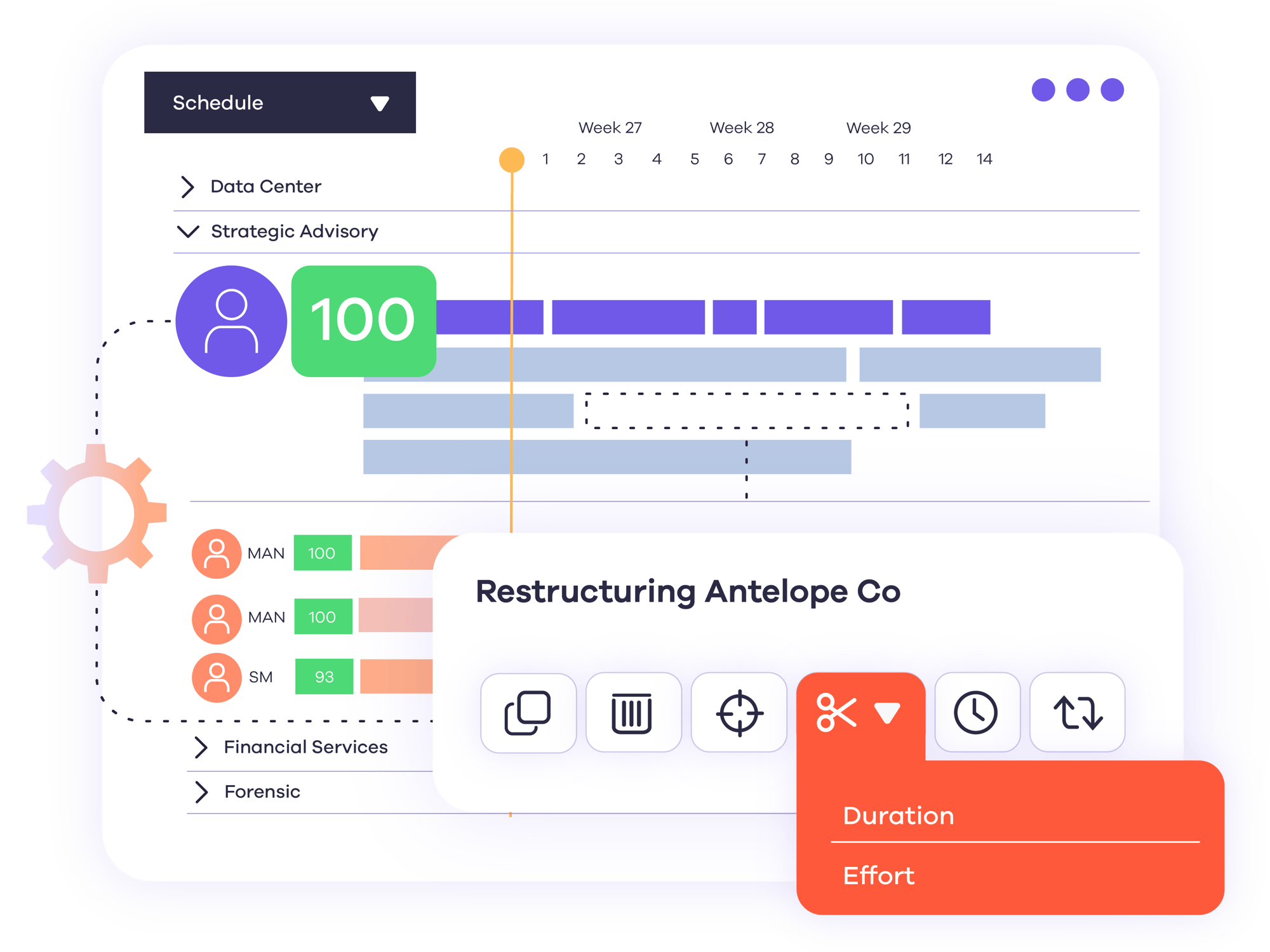
Resource leveling: this technique involves the adjustment of project timelines to match resource availability, preventing employees from being overloaded with unachievable deadlines. This allows resource managers to redistribute or reschedule tasks to keep a realistic timeline
-
Resource forecasting: this method predicts a firm’s future resource requirements to ensure the correct people, with the right skill set, are available to take on the work. By looking ahead and drawing on historical data, businesses have the time to hire, train, or reallocate work before skill gaps become a problem
-
Skills-based allocation: matching the right person to a project based on their skills, their experience, and their future development goals opens up a more intentional approach to career development, supporting employee engagement, motivation, and productivity
-
Skills-based hiring: sourcing and hiring talent based on people’s practical skills, instead of just their credentials enables hires to hit the ground running with minimal training. This reduces time-to-productivity, meaning new hires add value from their very first day
-
Flex strategy: a solid flex strategy anticipates bottlenecks and optimizes plans for reallocating work before issues escalate. This avoids rushed decisions that have a direct impact on client satisfaction and financial outcomes
-
CRM integration: connect resource planning to sales pipelines, allowing you to hire staff or allocate work before it’s even landed. Read more about Dayshape’s integrations
Professional services resource management best practices
Effective resource management is the result of deliberate processes, the right technology, and connecting resource with financial data. Here are some of the resource management best practices that will separate your business from the wider competition:
1. Keep a live resource dashboard
A live resource dashboard or database is a necessity when navigating resource management. Dayshape’s dashboards provide accurate real-time insights and detailed reports, allowing for better-informed resource reallocation decisions.
2. Involve employees
People are a firm’s most valuable asset. These resources are the driving force that determine what your firm can achieve, which is why any strategy or process needs to be clearly communicated. People need to be educated on the ‘why’, so key stakeholders can come on the journey with you.
3. Continuously measure data
There are multiple metrics that should be continuously tracked, including:
An AI-powered professional services resource management platform like Dayshape provides reports and dashboards for continual data tracking and reporting to support better-informed planning, forecasting, and decision making.
4. Trust in the power of AI
Humans can make mistakes, including overcommitting resources, neglecting dependencies, relying solely on intuition, and failing to monitor and adjust strategies in time.
AI can evaluate thousands of scheduling combinations simultaneously to come up with the most effective solution. Dayshape efficiently processes 50,000 scheduling options per second to find the resource that results in the best outcome.
As Andrew Bone, Co-Founder and VP of Product at Dayshape, explained: “The complexity, the scale, and the volume of decisions involved make it impossible for humans alone to process what is needed to plan effectively, consistently, and profitably.”
How to create a professional services resource management plan
When new projects come in, professional services firms need to understand the specific requirements, the resources required, and the financial impact on the company. This is why a forward-looking resource management strategy is essential.
Step 1: Assess demand and available resources
Start by reviewing upcoming project requirements alongside your current workforce. Consider the skills, experience, location, availability, and capacity of your people, then compare these against project needs, timelines, and client expectations.
The goal is to understand whether you have the right resources available to meet demand, and where potential gaps may exist before work begins.
Step 2: Identify resource gaps and potential conflicts
Once demand and capacity have been assessed, identify any risks that could impact delivery. This may include resource shortages, scheduling conflicts, skills gaps, planned leave, or individuals approaching full utilization.
Addressing these challenges early gives firms more options to rebalance workloads, adjust timelines, or secure additional resources before project performance is affected.
Step 3: Build a resource plan
With a clear view of demand, capacity, and potential constraints, firms can create a resource plan that aligns the right people to the right work at the right time.
This plan should consider not only immediate project requirements, but also broader business priorities, employee development opportunities, utilization targets, and client commitments.
Step 4: Monitor and adapt in real time
Resource management is not a one-time exercise. As project requirements, priorities, and workforce availability change, plans need to evolve accordingly.
By continuously monitoring capacity, utilization, project performance, and emerging risks, firms can make informed adjustments before issues impact delivery, profitability, or employee wellbeing.
Step 5: Review performance and improve future planning
After project completion, review resource allocation decisions, project outcomes, utilization levels, and delivery performance. Understanding what worked well and where challenges arose helps improve future forecasting, workforce planning, and resource management processes.
Over time, these insights enable firms to make more accurate decisions, respond more effectively to change, and build a more resilient workforce.
The role of AI in professional services resource management
AI is transforming resource management from a scheduling exercise into a strategic decision-making function. Rather than relying on manual processes and hindsight, firms can use AI to forecast demand, identify resource risks, model different scenarios, and make more informed staffing decisions.
This allows firms to move beyond simply filling roles and towards optimizing how work is delivered across the business. The result is better utilization, improved project outcomes, stronger financial performance, and a more balanced employee experience.
As AI continues to reshape professional services delivery, resource management will play an increasingly important role in helping firms balance human expertise, emerging AI capabilities, and evolving client expectations. The firms that can effectively plan and optimize this blended workforce will be best positioned to compete in the years ahead.
7 benefits of AI-powered resource management in professional services
AI-powered resource management helps firms move beyond manual planning and reactive decision-making, enabling them to optimize how work, people, and skills are deployed across the business. Key benefits include:
1. Reduced administrative burden: AI can automate repetitive tasks, such as resource matching, schedule updates, and capacity tracking, allowing resource managers and engagement leaders to spend less time on administration and more time making strategic decisions
2. Smarter resource allocation: AI can analyze factors like skills, availability, utilization, project requirements, and employee preferences to recommend the most suitable resources for each engagement, helping firms make better staffing decisions at scale
3. Improved forecast accuracy: by analyzing historical and real-time data, AI can help firms anticipate future demand, identify capacity constraints, and create more accurate resource forecasts
4. Greater operational visibility: AI-powered platforms provide a real-time view of capacity, utilization, demand, project performance, and workforce trends, giving leaders the information they need to make informed decisions
5. Earlier identification of risks: potential resource shortages, overallocation, skills gaps, and delivery risks can be identified before they impact project outcomes, allowing firms to take corrective action sooner
6. Better utilization and margin protection: by optimizing how resources are deployed across engagements, firms can improve utilization, reduce costly bench time, avoid overstaffing, and better protect project margins
7. Improved scalability: as firms grow, AI enables resource management processes to scale more effectively. Leaders can manage increasingly complex workforce and project demands without relying on additional spreadsheets, manual processes, or administrative overhead
Discover AI-driven resource management software from Dayshape
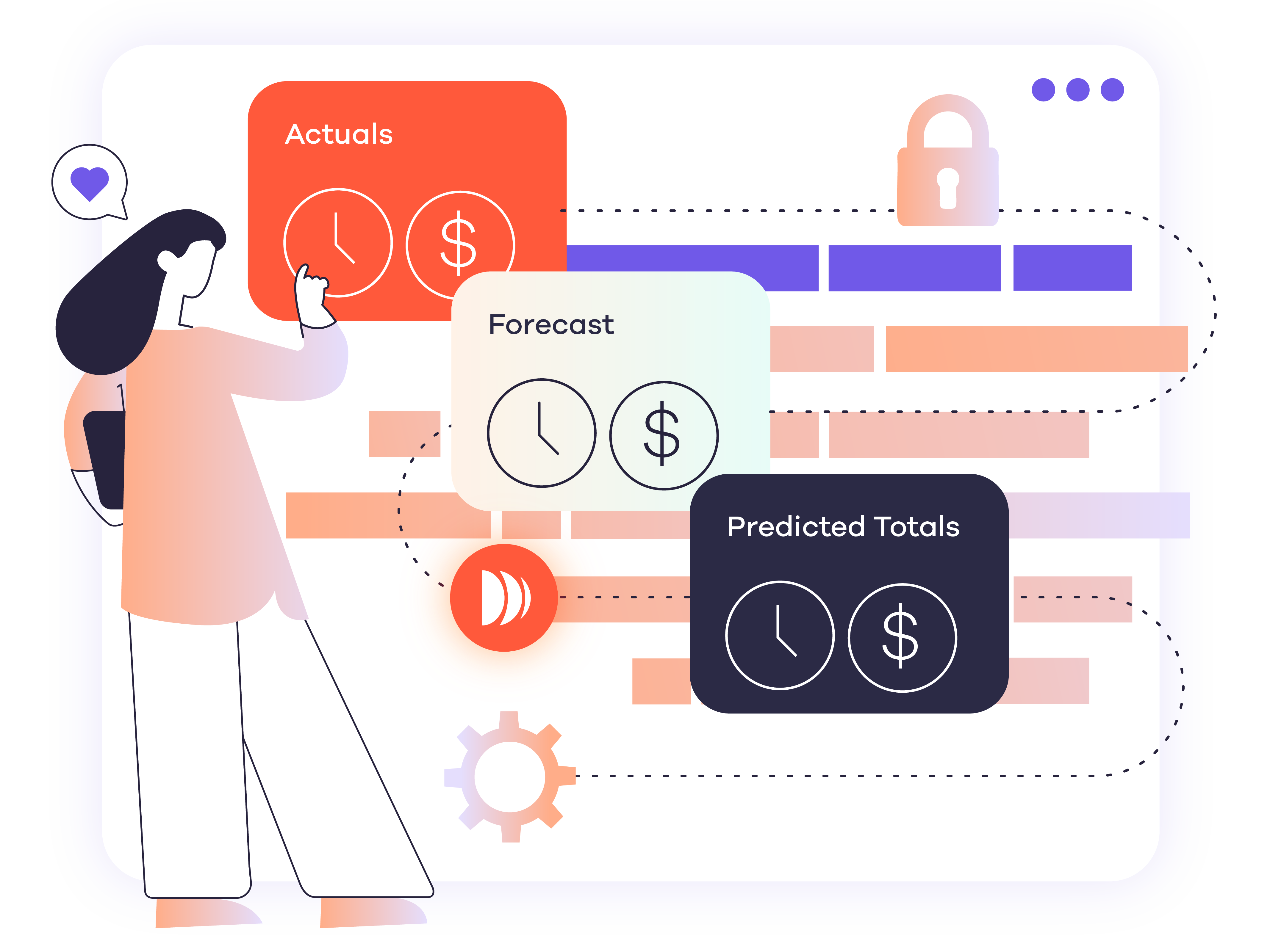
Dayshape is a powerful AI resource planning platform that provides a firm-wide overview of resources. With future performance predictions, budget planning, capacity planning, and accurate resource management. Create all of your resource plans and budgets together in one system for clear project financials to support your firm’s overall growth and profitability.
Book your free demo today to discover more about how Dayshape can positively impact your business.




.png?width=500&height=500&name=Untitled%20design%20(79).png)

.png?width=423&height=300&name=Blog-WEB-levelling-1600x900%20(1).png)