In this episode of Resource Revolution, the focus is on what it really takes to be seen as strategic in resource management – and why visibility, influence, and impact are not given, but earned.
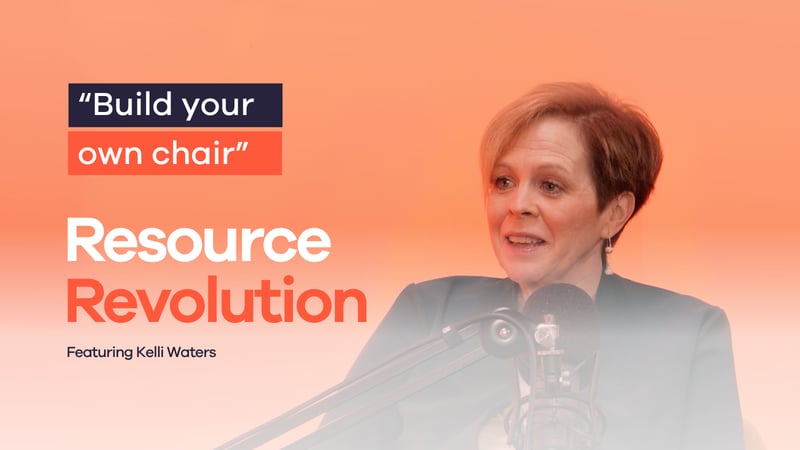
Host Christine Robinson is joined by Kelli Waters, who leads enterprise-wide resource management strategy at RSM US. With nearly 30 years’ experience across consulting and accounting, Kelli brings a grounded, practical perspective on how resource management can evolve from an administrative function into a strategic force within professional services firms.
From understanding the business to building stronger relationships and showing real value, Kelli’s advice is direct, experience-led, and refreshingly honest. For resource managers looking to elevate their role – and the profession – this is a powerful reminder of what really matters.
Tune in to the full conversation below or continue reading to digest the key talking points.
“You don’t get to be seen as strategic – you have to demonstrate it.”
One of the key points in the conversation comes when Kelli challenges some of the assumptions around what it means to be strategic in resource management.
There’s a lot of discussion in resource management about becoming more strategic, earning a seat at the table, and changing how the function is perceived.
Kelli cuts through that quickly.
“You don’t get to be viewed as strategic just because you want to be… You have to demonstrate a strategic activity in order to actually be seen as strategic.” -Kelli Waters
It’s not about intent. It’s about evidence.
At the heart of Kelli’s point is the idea that strategic influence isn’t something resource management teams can simply ask for. It has to be earned through the role they play in helping the business make better decisions.
That means understanding the wider business, speaking the language of leadership, and contributing beyond day-to-day staffing or scheduling. It means bringing forward insights, identifying risks or opportunities early, and helping leaders make smarter decisions around people, growth, delivery, and performance.
For Kelli, being strategic is less about title or perception, and more about consistently showing commercial value in the moments that matter.
“It’s not just about moving people – it’s about understanding the business.”
At the heart of Kelli’s approach is a deep focus on the business itself.
“It’s not just about moving people around… I know what your skills are. I know what skills are needed in the future. I understand the demand that’s coming down the pipeline.” - Kelli Waters
In professional services, every resourcing decision has a commercial impact. It shapes delivery, margin, growth, and ultimately how the firm performs. But that impact is only visible when resource managers understand how the business actually works.
Kelli doesn’t suggest becoming a technical expert in everything. Instead, her advice is much more practical: be curious, ask questions, and build a working understanding of the firm around you.
Because in professional services, resource management doesn’t operate in isolation. It sits inside the commercial engine of the firm – shaped by how work is sold, delivered, and staffed.
And that means understanding:
- What drives revenue
- Where margin is won or lost
- How different parts of the firm actually operate
That understanding gives resource managers the context to contribute differently.
Because when you understand the business, your conversations change.
And when your conversations change, so does your influence.
“Data is the starting point – not the story."
Data plays a huge role in how Kelli thinks about strategic resource management – but she’s equally clear that data on its own has limited value.
“I love data... But I will never just forward a spreadsheet… Because who’s got time to dig through a spreadsheet?” - Kelli Waters
For Kelli, the challenge is not a lack of data. It’s that too much of it gets shared without enough context, prioritization, or connection to what leadership is actually trying to solve.
That’s why she puts so much emphasis on understanding the business first.
Because when resource managers understand the commercial pressures leaders are balancing, such as growth targets, delivery risk, margin pressure, retention, and client demands, the conversation changes. Data stops being a reporting exercise and becomes a tool for influencing decisions, surfacing risk earlier, and helping the business respond more effectively.
“You have to understand what’s important to your leaders… Utilization isn’t always what they care about.” - Kelli Waters
For Kelli, this is the difference between sharing data and using it to shape better business decisions.
That might look like:
- Highlighting where burnout risk is building before it becomes a retention or delivery issue
- Identifying where capacity is sitting underused
- Challenging whether a delivery plan is realistic based on workload or available skills
- Helping leaders understand the wider business impact of resourcing decisions earlier
It’s not theoretical. It’s practical. And, as Kelli puts it:
“That is like strategic 101.” - Kelli Waters
“Relationships are what make the role work.”
For all the discussion around data and systems, Kelli keeps bringing the conversation back to something more fundamental: people.
“Resource management is really a relationship role. We have to build relationships with our people and our leaders. The best way to not build a relationship is to not talk to somebody.” - Kelli Waters
What comes through strongly in this conversation is that resource management doesn’t sit on the sidelines of the business. It sits right in the middle of it. Every decision connects people to work, and every decision impacts delivery, margin, and experience.
And as technology and AI take on more of the administrative workload, Kelli believes resource managers should be spending less time:
- Buried in administrative minutiae
- Relying solely on systems or transactional communication
And more time building the relationships that make better decisions and stronger collaboration possible.
“Work smarter, not harder. Technology should create space for what matters. AI isn’t here to take our jobs… It’s here to help us stop doing the administrative things so we can focus on the work that really matters.” - Kelli Waters
And for her, that meaningful work starts with something simple:
“Call them. That’s it. Just call them. There’s so much that can be done in a conversation that you just can’t get across in a typed conversation." - Kelli Waters
“If there’s no seat at the table, build your own chair.”
It’s not just a memorable line. It captures the core message running through the entire conversation.
Because throughout the episode, Kelli keeps coming back to the same core ideas:
- Understand the business
- Build relationships
- Communicate insights clearly
- Demonstrate value through action
That’s how influence is built.
And it’s what separates resource management leaders who are seen as strategic from those still struggling to gain recognition.
They don’t wait to be invited into important conversations.
They bring insight, context, and commercial value that the business can’t ignore.
“There’s no seat at the table… You need to go build yourself a chair. Find out what’s important to your leaders and deliver on that… That’s how you earn the seat at the table.” - Kelli Waters
Kelli’s message is clear: becoming more strategic in resource management is not about waiting for recognition, it’s about earning it.
Straight-talking and full of practical insight, Kelli leaves resource managers with two simple but powerful reminders:
1) If you want to build stronger relationships with your leaders and teams, call them.
2) If there's no seat at the table, build your own chair.

.png?width=500&height=500&name=Untitled%20design%20(79).png)