Professional services: Navigating a new operating era
Leadership perspectives on building the next generation operating model for the AI era, drawn from a 2026 survey of 400 senior leaders across mid-to-enterprise professional services firms in the UK and US.
At Elevate UK 2026, Dayshape's flagship conference for professional services leaders, Co-founder and VP of Product Andrew Bone shared his perspective on what comes next for the industry.
As AI becomes commonplace, he expects most firms to have broadly similar capabilities. AI will become a commodity, an expectation of the service firms deliver, rather than a competitive advantage in itself.
So where will firms differentiate?
Andrew identified five areas: people, proprietary data, brand, client experience, and the operational effectiveness underpinning them.
Connecting data, systems, and processes across a complex professional services firm is difficult. But that's precisely why firms that do it well stand to gain an advantage.
"It is really hard to do that well, but that is why I also see it as a really big opportunity for firms to differentiate, because not all firms will do it well, and the ones that do will win in the market."
Andrew Bone, Co-founder and VP of Product, Dayshape
What Moneyball can teach us about competitive advantage
At the same event, Dayshape CEO Matt Cockett drew on the story behind Moneyball to illustrate what happens when organizations challenge conventional thinking.
Faced with a fraction of the budget of baseball's biggest teams, the Oakland A's used data to identify overlooked talent and rethink how they built their team. Rather than competing on the same terms as everyone else, they found a different way to evaluate the resources available to them.
For Matt, there was another important lesson: data could inform the strategy, but the players still had to deliver on the field.
It's a useful parallel for professional services. As firms combine human expertise, global delivery, and AI, the opportunity is to reconsider how they evaluate capacity, deploy talent, and make commercial decisions.
More capacity, less visibility?
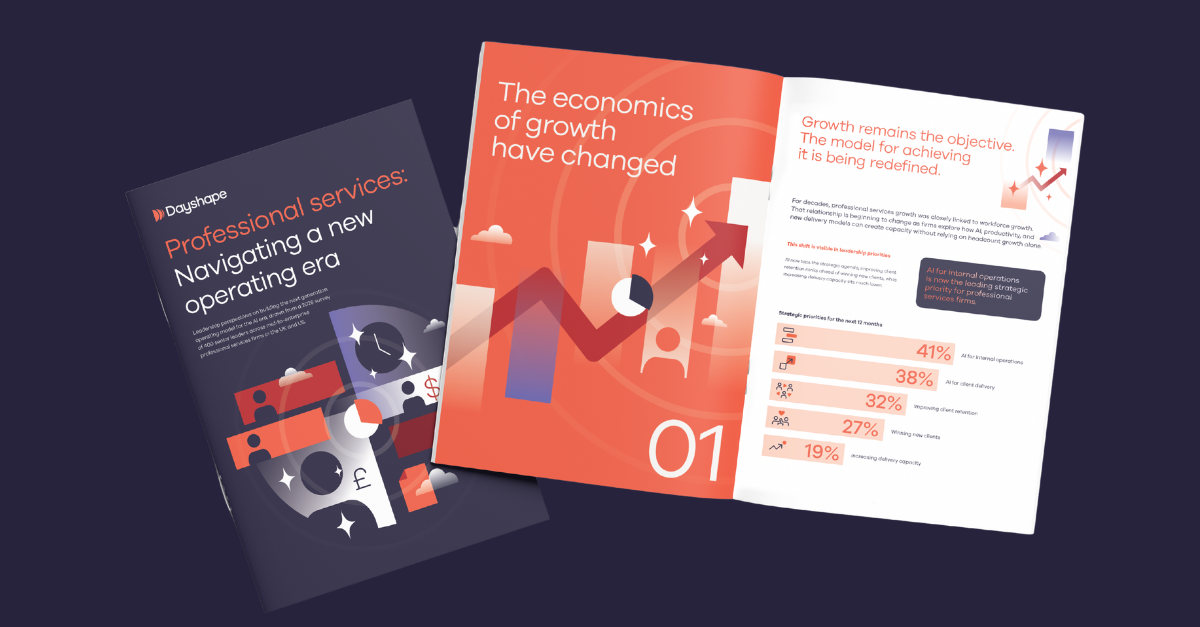
Dayshape's latest research of 400 senior professional services leaders in the UK and US reveals a striking gap: 79% say their firms already use AI to deliver client work, yet only 14% have embedded AI across all their resource management operations. Meanwhile, 41% identify AI for internal operations as a strategic priority.
Firms are investing in how work gets done, but the systems and processes governing what work to pursue, who should deliver it, and whether it will be profitable have not necessarily kept pace.
As Matt Cockett, CEO at Dayshape, observed at Elevate:
"AI is generating more capacity for a firm, but it's perhaps creating less visibility."
Matt Cockett, CEO, Dayshape
AI agents and global delivery teams are changing the economics of engagements. Traditional measures built around human hours and availability may not capture the full picture, including the costs of AI-enabled delivery.
And firms are already struggling to make effective resource decisions within existing delivery models. Dayshape's research found that 55% of firms miss, delay, or turn down client work because of capacity constraints, while 53% report reduced margins because of poor resourcing decisions.
As delivery becomes more complex, these challenges could become even harder to manage. Firms need a clearer view of how capacity, demand, and costs interact, and what those relationships mean for growth, client delivery, and profitability.
Connecting that intelligence across the business, and using it to inform commercial decisions, is becoming an increasingly important part of operational effectiveness and competitive advantage.
Your people are getting more productive. Is your firm?
If AI helps a consultant finish a task in half the time, can the firm see the capacity created? Can it redeploy that capacity to profitable work? Can leaders understand the implications for pricing, staffing, and future demand?
This is where organizational intelligence becomes critical: connecting operational information across the firm so leaders can understand what's happening, why it matters commercially, and what action to take.
Central to Andrew's vision is the role of operational effectiveness in helping firms stand apart. AI capabilities may become widely available, but connected data, effective processes, and the ability to act quickly across a complex firm are harder to replicate.
The opportunity goes beyond giving people faster access to reports.
Resource management teams have traditionally spent considerable time gathering information, preparing spreadsheets, and responding to requests from across the business. But knowing who is available or which engagements are over budget is only the starting point.
The real commercial value comes from understanding why problems are occurring, evaluating the available options, and identifying what action could improve the outcome.
The questions firms should be able to answer
Traditional operational view
Organizational intelligence
Who is available?
What's the most commercially effective way to deliver this work?
Which engagements are over budget?
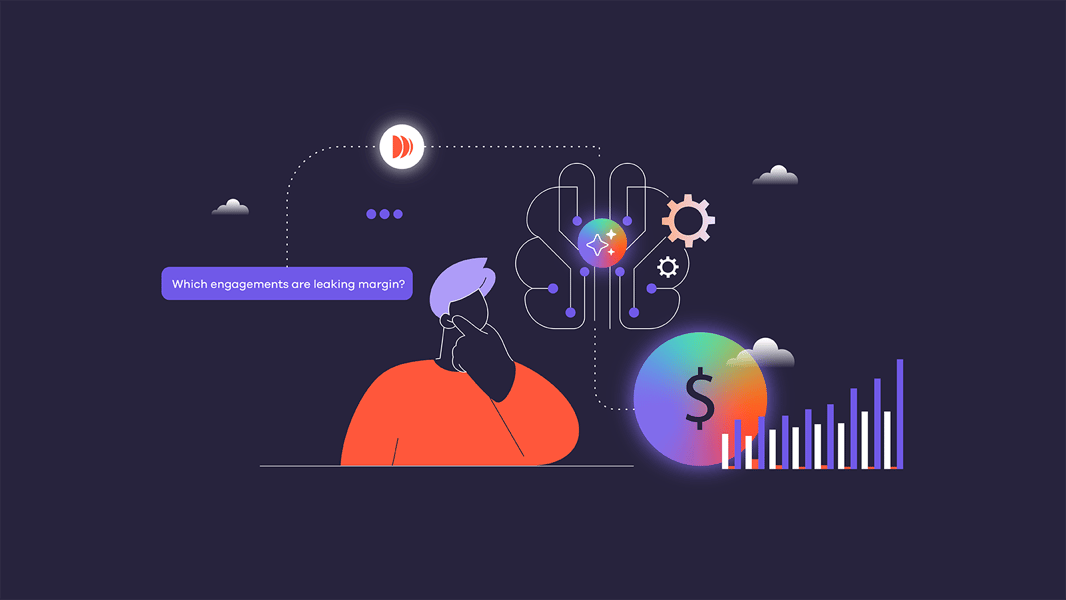
What's driving margin erosion, and which actions could improve it?
Where are our capacity gaps?
Where is demand likely to exceed capacity, and what can we do now?
How utilized are our people?
Are we deploying the right mix of skills, people, and AI profitably?
Can we staff this opportunity?
Can we deliver it profitably without compromising existing commitments?
AI creates opportunities to make that intelligence more accessible and actionable.
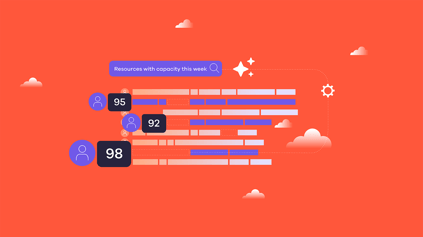
In a recent Dayshape Agent webinar, Andrew explored how data insights agents can help people understand what's happening across their business, while solutions agents go further by diagnosing causes, evaluating scenarios, and recommending actions.
He also outlined a broader vision for autonomous agents that could proactively monitor firm performance and surface emerging risks and opportunities.
The progression is from answering questions to analyzing commercial implications and recommending action, with people retaining control of the final decisions.
Crucially, that intelligence needs to extend beyond the resource management function.
Partners, engagement managers, finance teams, and executives all make decisions that depend on capacity, staffing, and commercial data. Yet too often, that information sits within specialist systems or requires resource managers to retrieve, interpret, and share it.
Giving decision-makers direct access to operational intelligence means they can explore questions, understand the commercial implications, and evaluate their options without relying on resource managers to act as the firm's information desk.
For resource management teams, that creates more time to focus on complex staffing challenges, strategic workforce planning, and the decisions where their expertise can have the greatest commercial impact.
Five questions professional services leaders should be asking
1. If AI is creating more capacity, where is that capacity going?
Can leaders quantify the capacity released through AI, see whether it's being redirected toward new client opportunities, and understand the effect on revenue and margins?
Greater individual productivity doesn't automatically translate into stronger firm performance. The commercial opportunity lies in understanding how that additional capacity can be deployed to maximize value.
2. Do we know what our engagements actually cost to deliver?
Timesheets, rates, and utilization still matter. But as AI contributes more to delivery, firms need to understand technology costs, changing grade mixes, and how these affect pricing and engagement profitability.
Are existing measures giving leaders an accurate picture of delivery economics?
3. Are we making the best staffing decisions for the engagement, or for the firm?
The most obvious staffing choice for one engagement isn't necessarily the most commercially effective decision for the wider business.
Assigning a highly experienced specialist might satisfy an immediate requirement while creating a shortage elsewhere or limiting the firm's ability to pursue another opportunity.
Can leaders evaluate skills, availability, existing commitments, delivery quality, and commercial impact before making those trade-offs?
4. How quickly can we turn capacity intelligence into a commercial decision?
If a major opportunity arrived tomorrow, could the firm assess the skills and capacity required, test staffing options, and determine whether it could deliver at the proposed margin?
Or would it take days of chasing information across teams?
At Elevate, Matt described a partner at a large UK firm who struggled to establish whether the business had the capacity to bid for new work. By the time the firm could assemble the information, smaller, more agile competitors were already pursuing the opportunity.
The speed and quality of resource decisions can directly influence a firm's ability to compete for work.
5. Are we spotting operational risks early enough to act?
Where are margin, utilization, bench, or workload issues emerging? What's driving them, and which interventions could improve the outcome?
The opportunity is to identify risks earlier, understand their commercial implications, and bring the right intelligence to decision-makers before problems become costly surprises.
The opportunity to do things differently
AI is changing the economics of professional services. As human expertise, global delivery, and AI become increasingly interconnected, firms will need to rethink how they measure capacity, evaluate profitability, and decide where to deploy their resources.
Dayshape's research suggests leaders already recognize the commercial importance of getting this right. 98% say resource management is important to financial performance, while 82% see workforce planning as a strategic lever for growth.
The next challenge is putting that intelligence to work across the business.
Dayshape Agent offers a practical example. Available through Microsoft Teams and Copilot, it combines a firm's resource data with Dayshape's specialist resource optimization expertise to identify engagement margin risks, evaluate staffing and capacity options, and recommend practical next steps.
It brings that intelligence directly to partners, finance leaders, and resource managers, helping them understand their options and make informed commercial decisions.
As Matt's Moneyball analogy reminds us, AI can change how we evaluate the options in front of us. But its real value comes from whether firms are actually prepared, and bold enough, to do things differently.
See how we're putting this vision into practice with Dayshape Agent, our new specialist AI designed to help accounting firms move beyond operational insights to practical solutions.